History & heritage
Mizdakhan: a layered necropolis
Read Mizdakhan as a living cultural landscape rather than a single monument.
A city of memory on the plateau
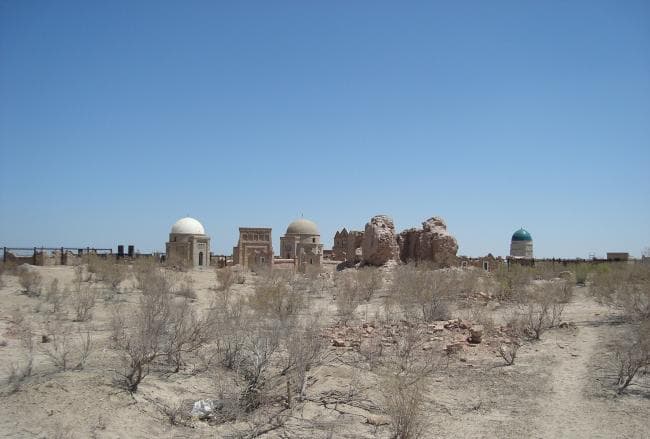
Mizdakhan occupies a broad, wind-shaped rise near Khodjeyli. Its tombs, shrines and traces of settlement belong to different centuries, so the site is best understood as a layered landscape. A visit links funerary architecture, local pilgrimage and the wider history of ancient Khorezm.
The visible monuments are only part of the story. Paths, open ground and views toward Gyaur Kala help explain why people continued to return here and attach new meanings to older places.
History, belief and careful interpretation
Archaeological dating and local oral tradition do not always speak in the same vocabulary. Good interpretation keeps both in view: scholarship helps place structures in time, while community memory explains why a place remains important today.
Visiting with respect
Mizdakhan is an active heritage and remembrance landscape. Dress and behaviour should be considerate, stay on established paths, and ask a local guide before treating a shrine as a photo backdrop.
Questions
How old is Mizdakhan?
The complex contains remains from several periods; guides can explain which monuments are associated with particular eras.
Is Mizdakhan only a cemetery?
No. It is a wider archaeological and cultural landscape with settlement traces, sacred sites and pilgrimage traditions.